top of page


A SYMBOL OF GLORY
HUSARZ 1673
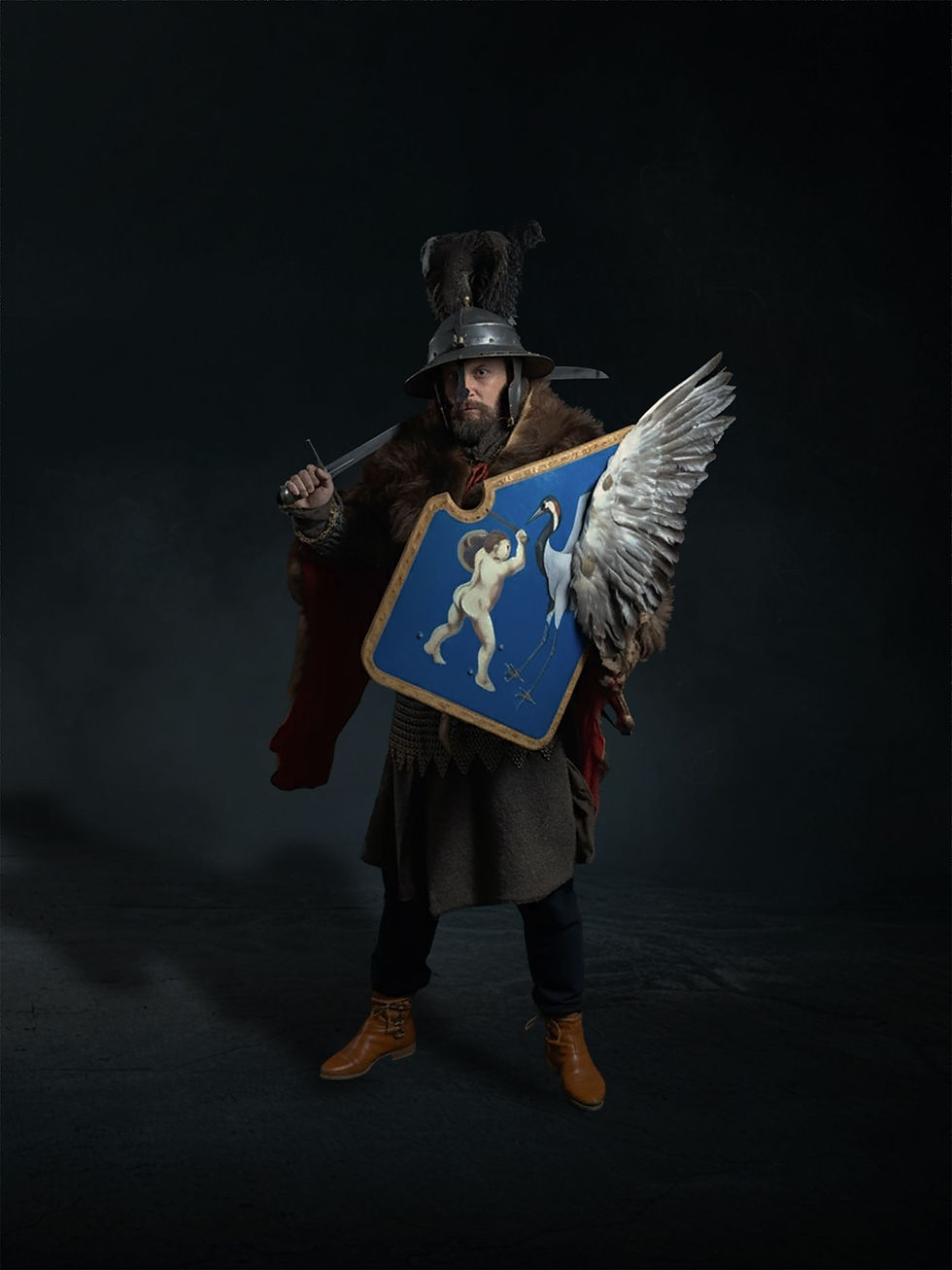
We present the silhouette of a Hussar Comrade (Towarzysz husarski) from the year 1673 – the date of a great triumph for Polish arms at the Battle of Khotyn (Chocim). It was there, under the command of Grand Crown Hetman Jan Sobieski, that the hussars once again proved to be the most powerful cavalry in the world, breaking enemy lines and securing a magnificent victory for the Polish-Lithuanian Commonwealth.
VISIBLE ELEMENTS OF CLOTHING AND ARMAMENT:
HUSSAR SZYSZAK (HELMET): Western-style lobster-tail pot helmet with adjustable nasal guard, cheekpieces, and laminated neck guard.
HUSSAR HALF-ARMOR: Laminated breastplate and backplate with segmented pauldrons.
BRACERS WITH MAIL MITTENS (KARWASZE): Steel bracers with chainmail mittens (łapcie) protecting the hands.
LEOPARD SKIN: Draped over the left shoulder; mark of officer (towarzysz) status and psychological weapon.
HUSSAR WINGS: Zoomorphic wings with eagle feathers mounted directly to the backplate.
POLISH SABER: Curved blade with L-shaped cross-guard and thumb ring (paluch).
LONG SWORD: Occasionally used instead of a koncerz or pałasz.
ŻUPAN: Long garment worn beneath the armor, foundational to noble attire.
HUSSAR BOOTS: Tall yellow leather boots reinforced with steel heel plates (podkówki).









bottom of page